
DENPASAR – The Kura Kura Bali Nursery at Fish Bone Park currently cares for 25,941 plants representing 83 species to support vegetation and landscaping needs across the Kura Kura Bali Special Economic Zone (SEZ).
The collection consists of shrubs and trees at different stages of development, ranging from seedlings to plants that are ready to be introduced into the landscape.
Based on data recorded as of September 11, 2026, the nursery contains 57 shrub species and 26 tree species.
Of the total collection, 14,674 plants remain in the seedling stage, 10,746 are undergoing further growth and development, while 521 plants are ready for planting.
Kura Kura Bali Nursery Supports Green Landscape Development
The Kura Kura Bali Nursery serves as one of the supporting facilities for landscape management across the area.
Demand for plants continues to grow alongside the expansion of Kura Kura Bali’s green spaces. In 2026, landscaped green areas covered approximately 240,379 square meters, nearly double the area recorded in 2023.
Management data also indicates that approximately 737,441 trees and shrubs were established throughout the area by 2026, compared with approximately 177,000 plants in 2023.
The increase reflects the growth of managed vegetation alongside the continued development and expansion of the area’s landscape.
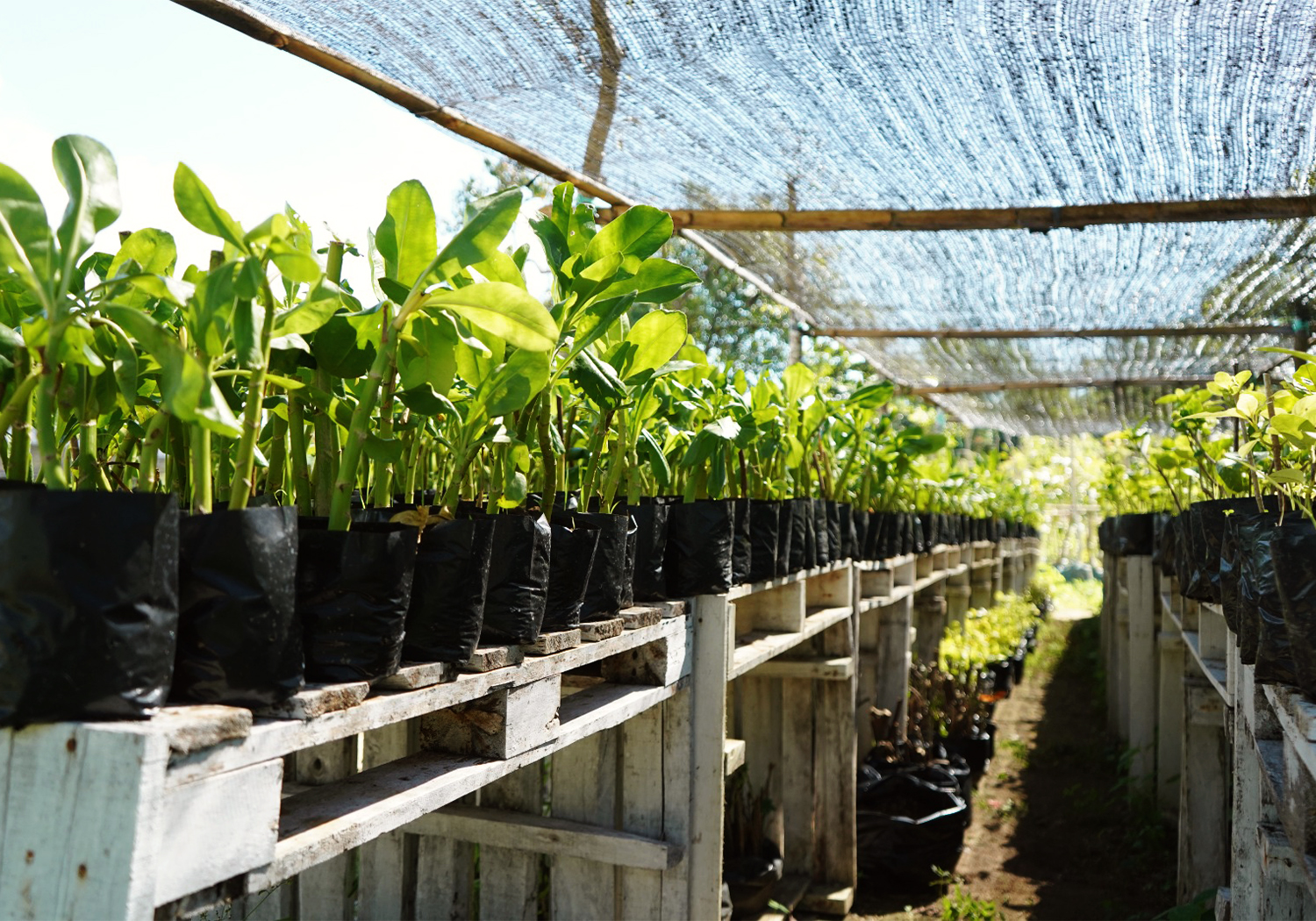
83 Plant Species Cared for at the Nursery
Some of the nursery’s largest plant populations include cendrawasih (Phyllanthus myrtifolius), with 3,889 plants; oleander (Nerium oleander), with 2,764 plants; and beach naupaka (Scaevola taccada), with 2,475 plants.
Other species include crown flower (Calotropis gigantea), gardenia (Gardenia jasminoides), frangipani (Plumeria pudica), and ti plant (Cordyline fruticosa).
These diverse species are cultivated to support different landscape requirements across Kura Kura Bali.
Connected with the Island Compost Center
In addition to propagation and plant care, nursery operations are connected with the Island Compost Center (ICC), also located at Fish Bone Park.
Compost produced by the ICC can be used to support plant maintenance at the nursery and across landscaped areas, depending on the requirements of individual plants and the suitability of the growing medium.
This connection forms part of a more integrated approach to area management, where organic materials can be returned to the landscape to support vegetation and green spaces.
64 Percent of the Workforce Comes from Serangan Village
The operation of the Kura Kura Bali Nursery also involves members of the surrounding community.
Management records show that 64 percent of the workforce responsible for nursery maintenance comes from Serangan Village.
They work through three partner organizations: CAREFAST, KKBP, and PERKASA.
Astini and Dayu, both workers from Serangan, said their daily activities range from plant propagation to ongoing maintenance.
“We start working at 8 in the morning. Our activities range from propagation to plant maintenance, and everything is done here,” Astini and Dayu said.
The involvement of the surrounding community supports landscape maintenance while also creating opportunities for local workers to participate directly in environmental management within the area.
Growth in Harmony with Environmental Stewardship
Zefri Alfaruqy, Head of Communications at PT Bali Turtle Island Development (BTID), said landscape development is being carried out with attention to both environmental management and local community involvement.
“We are developing the Kura Kura Bali SEZ landscape through an integrated and sustainable approach. Through the Nursery and the use of compost from the Island Compost Center (ICC), the Nursery symbolizes how the area’s growth can progress in harmony with environmental conservation while creating benefits for the surrounding community,” Zefri Alfaruqy said.
By caring for 25,941 plants across 83 species, the Kura Kura Bali Nursery forms part of an integrated landscape management system connecting plant propagation, organic waste management, green-space development, and local community participation.
Source: NusaBali.com