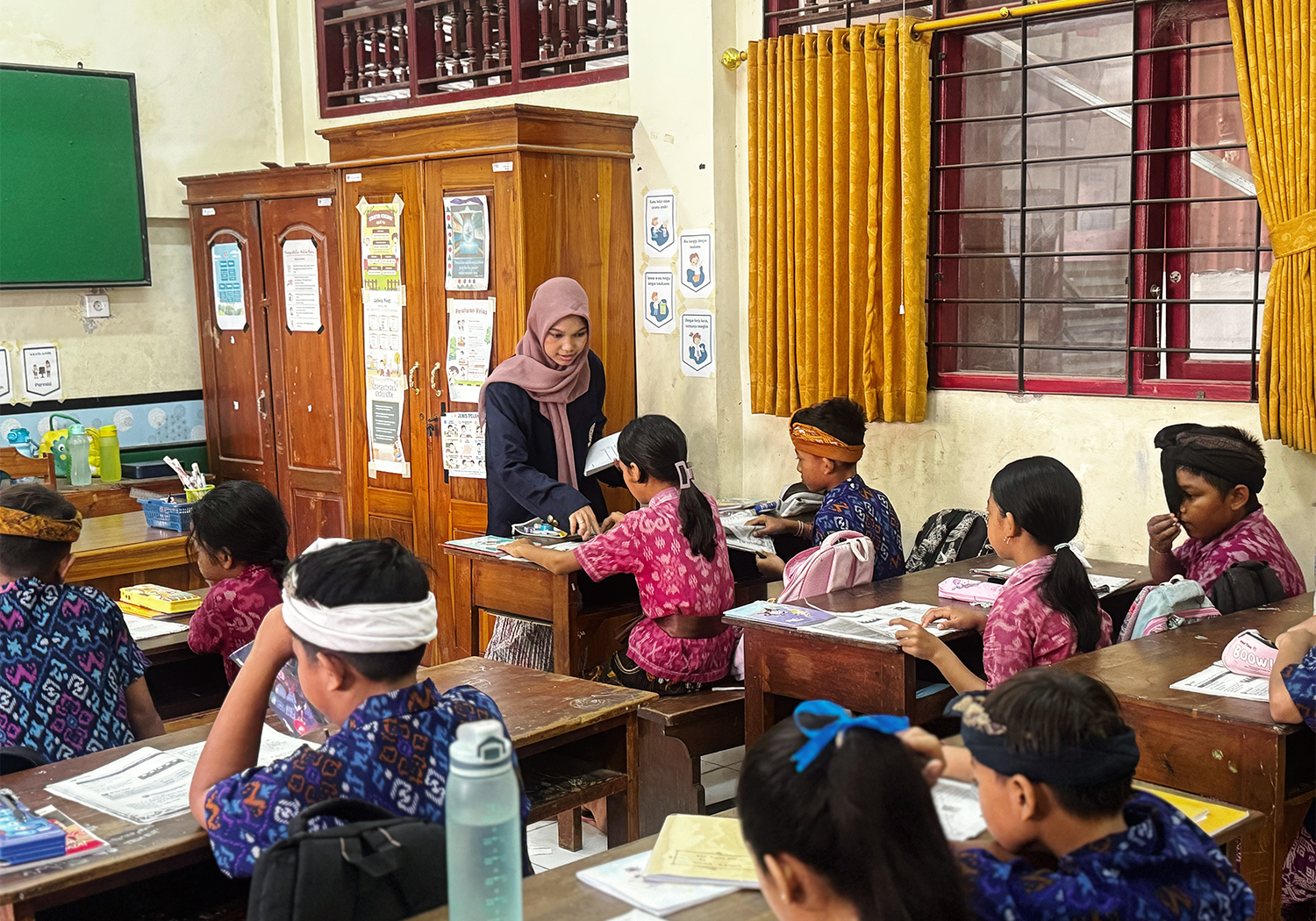


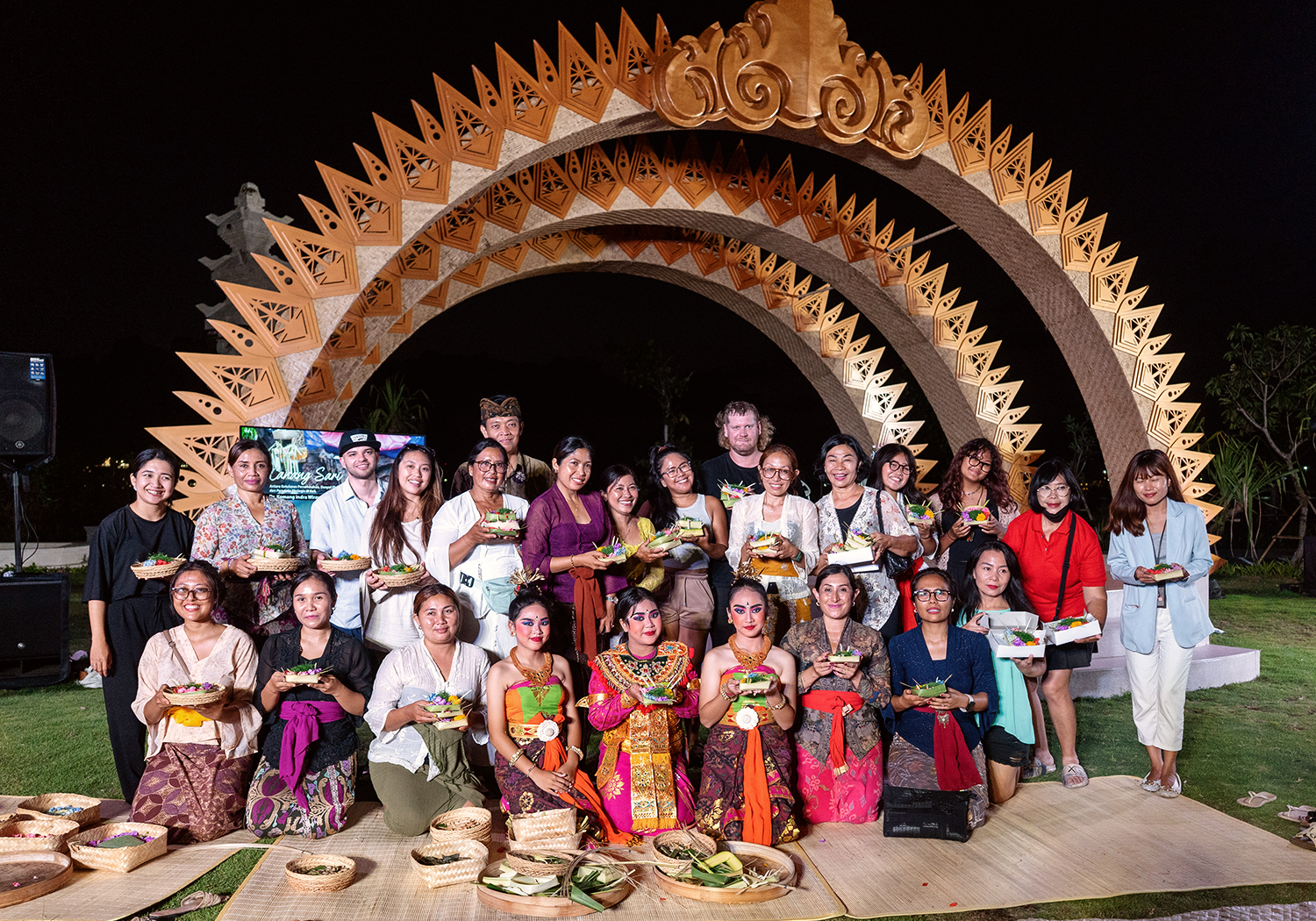
DENPASAR – A canang workshop at Sira Village provided an opportunity for local communities and tourists to explore the philosophical, theological, and aesthetic significance of Balinese traditions through the Book Talk & Workshop Canang event organized by PT Bali Turtle Island Development (BTID) at Sunset Mandala, Sira Village, on Thursday, November 5, 2026.
Canang is more than an arrangement of young coconut leaves and flowers commonly seen throughout Bali. Beyond its appearance and placement, it carries spiritual and cultural meanings that form an important part of everyday life for the Balinese Hindu community.
The event featured Erin Sogan, a photographer and author, alongside I Komang Indra Wirawan, a Balinese academic and cultural expert.
Through a book discussion, traditional cultural performances, and a hands-on canang-making workshop, participants were invited to discover the meaning behind these offerings while gaining a deeper appreciation of Bali’s cultural heritage.
Canang Workshop at Sira Village Explores Balinese Philosophy and Traditions
In Balinese Hindu tradition, canang is one of the most fundamental forms of yadnya, or sacred offerings, practiced in everyday religious life.
During the event, the word canang was explained as originating from Old Javanese, or Kawi, with can meaning beautiful and nang meaning purpose. Meanwhile, sari refers to essence or the innermost part.
During the book discussion, I Komang Indra Wirawan explained that canang holds an important place as one of the cultural identities of the Balinese Hindu community.
Its meaning extends beyond the arrangement of materials and visual appearance, encompassing theological values and spiritual symbolism.
“Canang is one of the cultural identities of the Hindu community in Bali. From a theological perspective, it carries extraordinary meaning because it represents symbols of the divine, or symbols of God Himself,” I Komang Indra Wirawan said.
He also highlighted the aesthetic values found in the individual elements of canang, including the use of colors associated with the Panca Dewata concept.
“In the concept of Panca Dewata, certain colors are represented. From an aesthetic perspective, canang holds remarkable artistic beauty and value,” he added.
According to I Komang Indra Wirawan, understanding Balinese traditions should continue to be encouraged through educational activities that are accessible to different communities, particularly younger generations.
He also expressed appreciation for BTID’s initiative in creating opportunities for local communities and visitors to learn about Balinese culture.
“As part of the younger generation, I am very grateful. I hope Balinese people will never forget their own culture,” I Komang Indra Wirawan said.
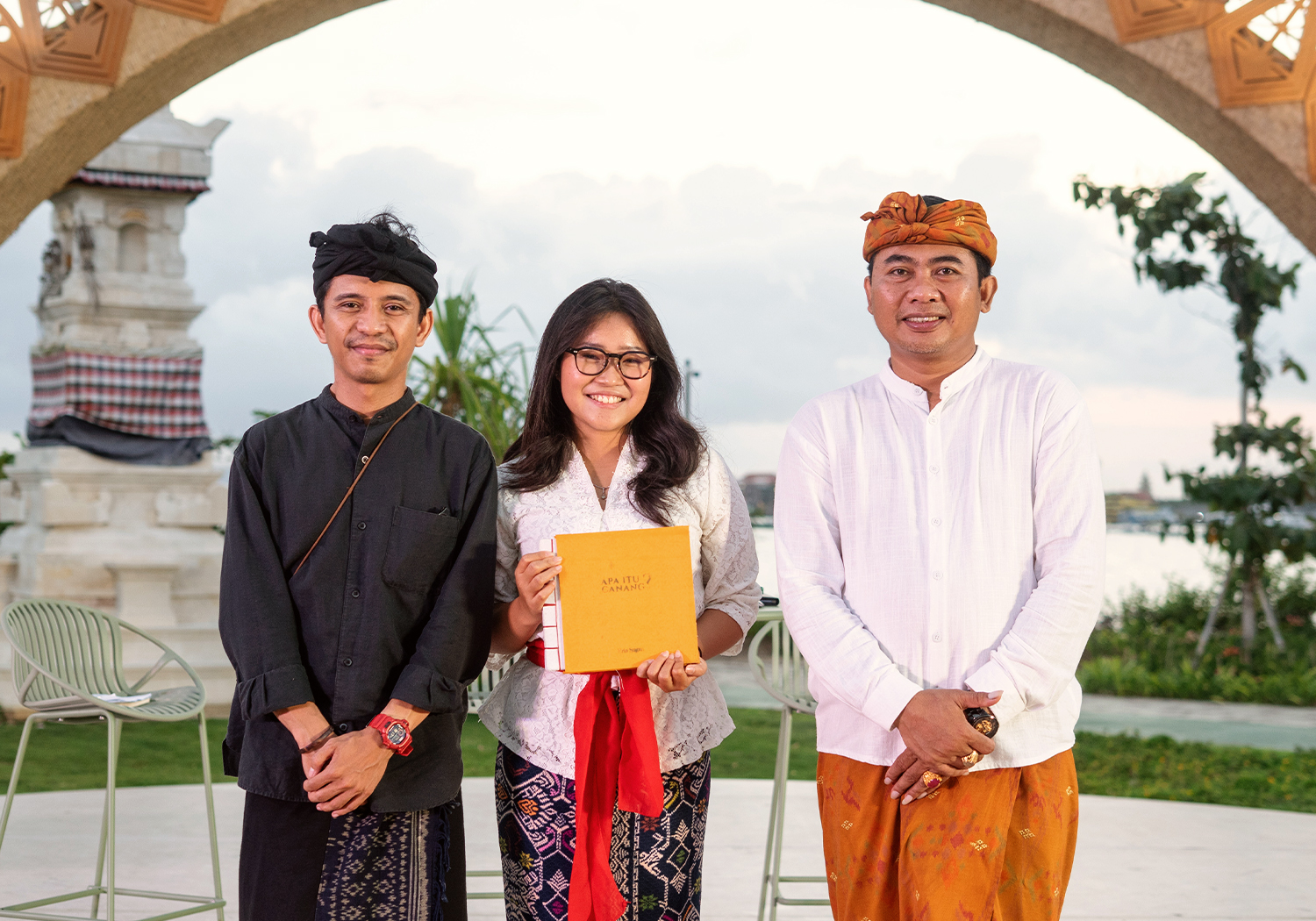
Erin Sogan Introduces Canang Through the Book “APA ITU? CANANG”
Meanwhile, Erin Sogan shared the story behind her interest in documenting canang through her book titled “APA ITU? CANANG”.
As someone who moved to Bali, she became curious about the offerings because she frequently encountered them in different places throughout her daily activities.
“I think the first reason was that I could find them everywhere. Their placement raised so many questions for me. Why are there canang on motorcycles, in cars, at shop stalls, and even on refrigerators?” Erin Sogan recalled.
This curiosity eventually inspired her to document and introduce canang from the perspective of someone who was not originally from Bali.
She believes that cross-cultural dialogue is important in helping newcomers understand the traditions practiced in the communities where they live.
“We know that Bali is home to many newcomers. It is not only Balinese people living here, but also people from all across Indonesia. Hopefully, by attending an event like this, people can discover what canang really is, what it means, and ultimately learn to respect the culture of the place where they live,” Erin Sogan explained.
Through her book and the discussion, participants were encouraged to see canang not simply as an everyday feature of Balinese life, but as a cultural tradition carrying profound meaning and values.
Learning to Make Canang with Women from Serangan Village
The Book Talk & Workshop Canang event went beyond discussions about the philosophy and meaning of canang.
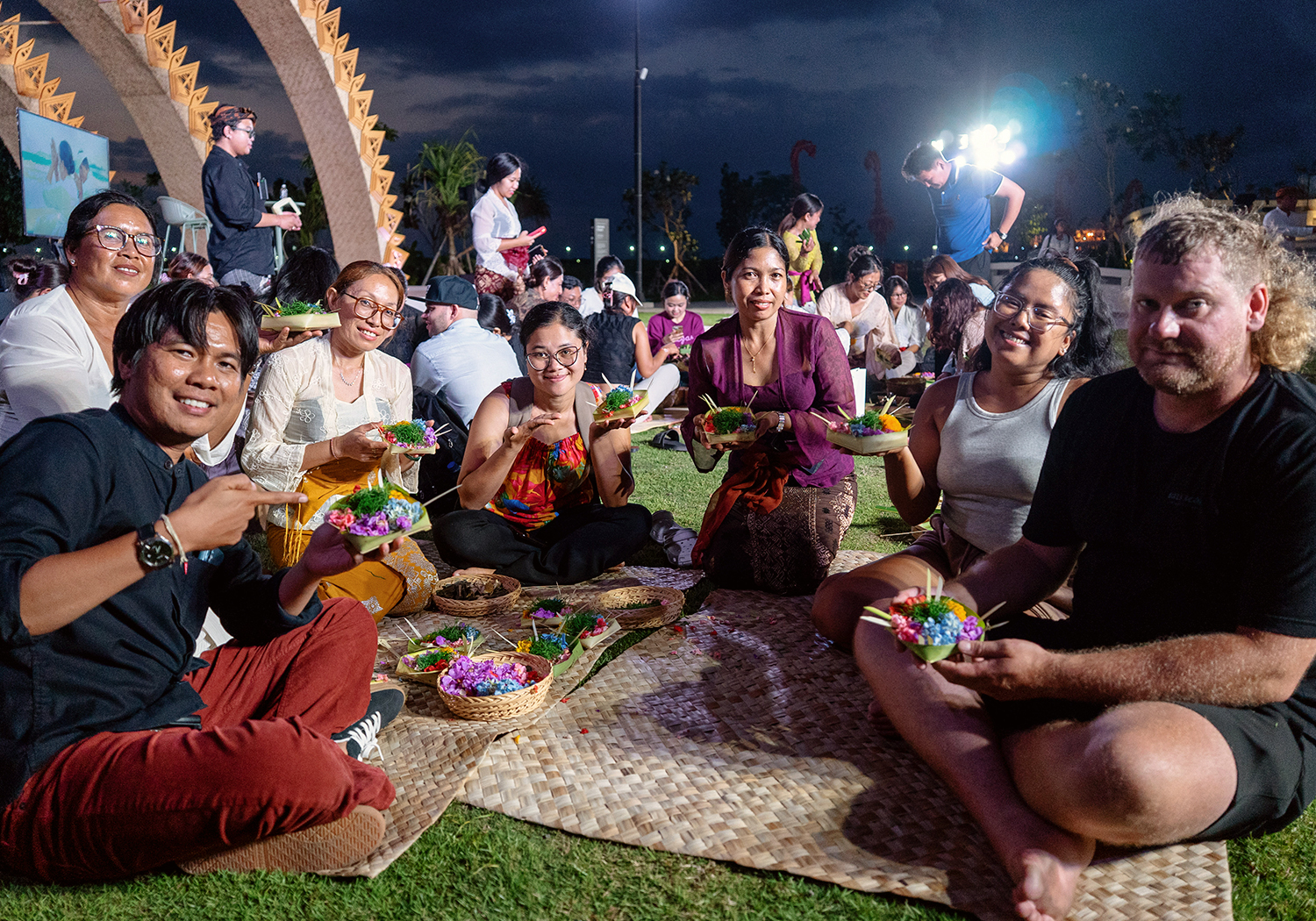
Participants also enjoyed a traditional Balinese dance performance by Oemah Seni before joining a hands-on canang-making workshop guided by members of the Serangan Village PKK women’s community.
During the practical session, participants learned about the materials used, the preparation process, and the cultural significance of the different elements that make up a canang offering.
The workshop also created opportunities for direct interaction between local residents and visitors seeking a deeper understanding of Balinese traditions.
The experience received positive responses from participants, including Nadya, a domestic tourist, and Ioannis, a visitor from Greece.
Nadya said the workshop gave her a better understanding of the ceremonial offerings she had frequently encountered during her time in Bali.
“I think it is wonderful because now we understand how canang is made. We see it when we are sitting somewhere, along the streets, and in homes, but we do not necessarily know what it means. At our villa, we see it every day, yet we did not understand why it was there, what its philosophy was, or what it represented,” Nadya said.
Through the hands-on experience, participants were able to move beyond simply observing Balinese traditions to learning how canang is created and understanding the cultural values behind it.
BTID Supports Balinese Cultural Preservation Amid Modernization
Zefri Alfaruqy, Head of Communications at PT Bali Turtle Island Development (BTID), said the initiative reflects the commitment of the developer of the Kura Kura Bali Special Economic Zone (SEZ) to preserving Balinese traditions and cultural identity amid modernization.
According to Zefri, the development of the area should not focus solely on infrastructure and facilities, but must also recognize and respect cultural values and local wisdom passed down through generations.
“For us, area development is not only about building infrastructure and facilities. It is also about ensuring that cultural values and local identity remain an important part of the area’s growth.”
“Bali has a rich cultural heritage and local wisdom that have been passed down through generations. That is why we believe meaningful development is not only about what we build, but also about what we preserve,” Zefri Alfaruqy said.
He added that cultural education initiatives such as the canang workshop at Sira Village are expected to create meaningful interactions among local communities, visitors, and tourists.
“Through activities like this, we want to create a space for interaction where local communities, visitors, and tourists can discover and appreciate Balinese culture more closely.”
“Community involvement is an essential part of this approach, ensuring that cultural preservation goes beyond discussion and becomes something people can experience and participate in directly,” Zefri Alfaruqy added.
Sira Village Creates Space for Balinese Cultural Appreciation
Through the Book Talk & Workshop Canang, BTID hopes that Sira Village Grand Outlet Bali can continue to develop as a destination offering more than shopping and leisure experiences.
The event provided an opportunity for local communities and international visitors to discover and appreciate Bali’s rich cultural heritage through educational and participatory activities.
The involvement of the Serangan Village PKK women’s community, local artists, academics, and participants from different backgrounds reflects the importance of direct participation and cultural exchange in sustaining traditional practices.
The initiative also forms part of the Kura Kura Bali SEZ’s broader efforts to integrate local values, community involvement, and sustainable area development.
Through the canang workshop at Sira Village, Balinese traditions are presented as a living cultural heritage that can be understood, appreciated, and preserved together.
Source: NusaBali.com