The Kura-Kura Bali Special Economic Zone (SEZ) has established itself as a premier destination for scientific research regarding the influence of music on brain development, health, and human behaviour. This commitment was highlighted by a high-level scientific discussion held at the UID Campus, located within the Kura-Kura Bali SEZ, titled 'Music and Brain: Imaging Imagination – Musical Creativity and The Brain.'
Marking its third consecutive year at Kura-Kura Bali from January 9-11, 2026, the event is a collaborative synergy between the Tsinghua Southeast Asia Center (TSEA), Tsinghua University, and the Ministry of Higher Education, Science, and Technology (Kemdiktisaintek).
During this prestigious gathering, the Deputy Minister of Higher Education, Science, and Technology, Prof. Stella Christie, expressed her appreciation for Kura-Kura Bali’s transformation into a hub for the advancement of science and technology for the wider community.
"Thank you for creating such a beautiful space where scientists, government officials, industry leaders, and the general public can meet on equal footing to exchange ideas. Kura-Kura Bali could have easily become just another hotel, a shopping center, or any of the common developments we often see in Bali. Instead, it is now also dedicated to the pursuit of knowledge," stated Stella Christie.
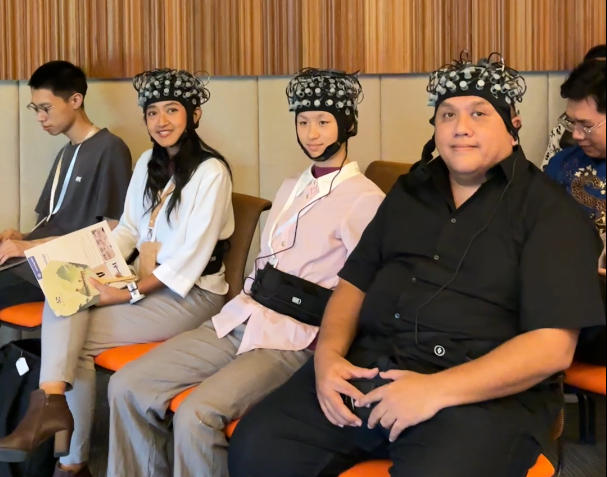
Deputy Minister Stella Christie further emphasized that while the link between music and brain function has become a global research standard, Indonesia is rapidly accelerating its efforts to strengthen studies in this field. She noted that the government has allocated IDR 3.2 trillion in research grants for 2025, marking a significant 218% increase from IDR 1.4 trillion in 2024.
"Research and knowledge do not stop at the laboratory; they manifest in our daily lives. As Indonesians, we should take pride in our musical diversity and learn from it. We are creating a robust ecosystem and providing strong funding to support this," she explained.
Aligning with this vision, world-renowned music neuroscience expert from the University of California, San Francisco, Prof. Charles Limb, attended the event to present his research. His findings prove that music serves a purpose far beyond mere entertainment. The existence of music across nearly all human cultures points to a fundamental biological function, particularly concerning mental health and social connectivity.
Expressing great enthusiasm, Prof. Charles Limb shared his optimism regarding this cross-disciplinary synergy and hopes that Bali can become the next hub for high-quality research.
"Everyone who cares about this, everyone who loves music and science alike and wants to see these two worlds converge—we are all here, playing our part. We simply need the right context and environment to make this happen repeatedly. If this isn't happening in the US or Washington DC, perhaps it can happen elsewhere in the world—perhaps even in Bali," he remarked.
Over the course of three days, the workshop offered an immersive experience that transcended theoretical study. Participants witnessed live demonstrations of cutting-edge technology and musical performances that explored the wonders of rhythm and melody and their profound effects on the human brain.
Another highlight of the workshop was the exploration of future technologies aimed at making music inclusive for those with hearing impairments. The event concluded with a public lecture, part of an ongoing effort to broaden public access to scientific discourse and strengthen the connection between the world of research and the community.
Source: https://mediaindonesia.com/nusantara/849475/kek-kura-kura-bali-jadi-basis-riset-pengaruh-musik-bagi-otak-dan-kesehatan-manusia



Serangan Residents and BTID Welcome Sea Turtle Home
ACS (International) to set up 2 more schools in Indonesia, including Kura Kura Bali

The Grand Outlet Bali Officially Starts Construction in Kura Kura Bali Special Economic Zone

Kura Kura Bali International CubMu Jazz Festival 2023

Singapore Investors Flock to Bali’s New Green SEZ, Plan to Build Luxury Resort and School

Achieving 75% Of Investment Goals, Kura Kura Bali Sets the Stage for Long-Term Impact